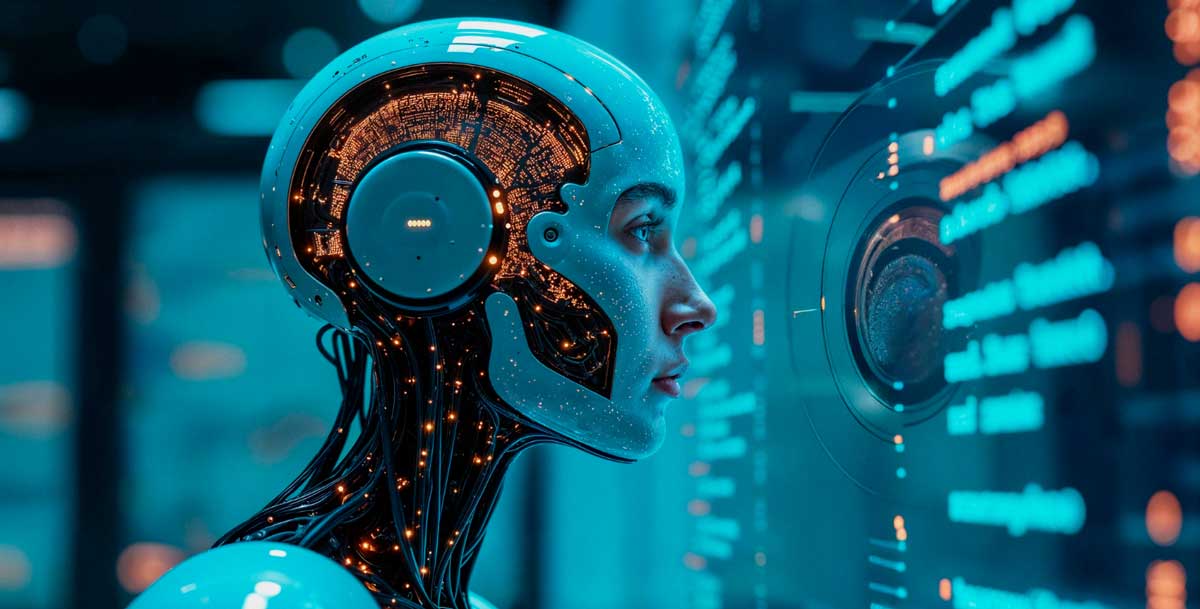
Machines that take on the work people should not have to
Robotics at Dynaiz is geared towards advancing manufacturing technology, which underpins a sustainable society. We aim to ease labour shortages, enhance productivity and at the same time increase worker satisfaction, by creating solutions through joint development with customers rather than delivering a cell and walking away. The product line spans industrial automation, healthcare, social systems, and the devices and modules underneath them.
-
Applications
- Industrial automation
- Healthcare robotics
- Social systems and energy
- Devices and modules
-
Technology
- Motion planning and control
- Computer vision and perception
- AI-assisted decision making
- Teleoperation and remote supervision
-
Status
In development
Developed jointly with customers

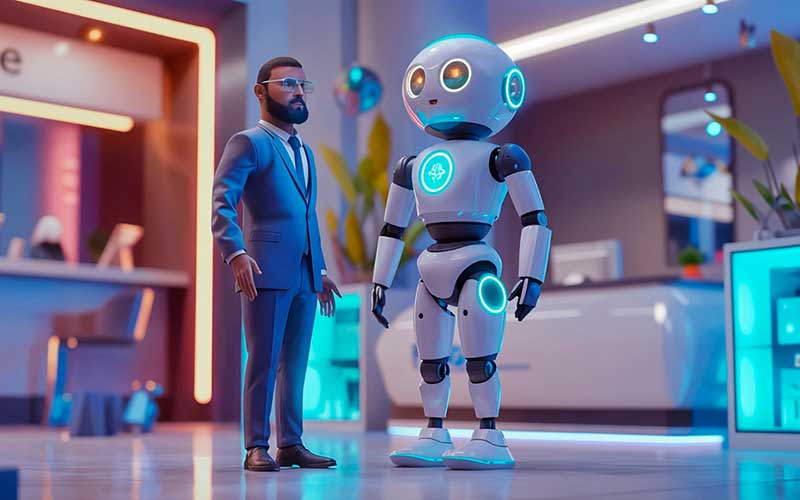
Operational efficiency
A robotic cell earns its place by taking a repetitive, hazardous or hard-to-staff task off the line and giving back consistency. The measure is not how advanced the machine is; it is whether throughput, quality and safety all move in the right direction at once, and whether the operators trust it enough to leave it running.
Offer functionalities
- Robotic cell and fixture design
- Actuator, end-effector and sensor integration
- Computer vision and perception
- Line and workflow integration
- Telemetry and condition monitoring
01 Background
Automation projects usually fail in the same place. The engineering is sound, the demonstration goes well, and then the cell meets a line that runs slightly differently to the way it was described: a part presented at the wrong angle, an operator who works around a jam, a changeover nobody mentioned. Within a month the cell is switched off and treated as a lesson.
Joint development exists to prevent that. Your operators and engineers work with our team from concept through commissioning, shaping the layout, the interface and above all the exception handling. The people who will live with the machine get to argue with it before it is built.

02 The Challenges
Labour shortages, safety obligations and quality expectations are all rising together, and the tasks under most pressure are the ones people least want to do.
What robotics is usually brought in to fix
- Repetitive work that causes injury over time
- Tasks in hazardous or inaccessible environments
- Quality variance between shifts and operators
- Roles that are persistently hard to staff
03 The Solution
From conceptualisation to deployment, the process runs end to end. We integrate current technologies (AI, sensors and control systems) into solutions built for a specific line rather than a general-purpose demonstration, and we commission them alongside the people who will run them.
The same capability points outward as well as inward. Whether exploring unknown terrain or inspecting hazardous environments, drones, rovers and autonomous systems with current sensor packages collect data that would otherwise put someone at risk, and report it back through the same telemetry and monitoring layer as the cells on the factory floor.